

During the course of the series, the Draped Bust Half Cents were struck on a number of different planchets. At the time, the Mint had been unable to acquire copper planchets at a steady rate or from a single source. In some cases, half cents were even struck on planchets from cut-down large cents.
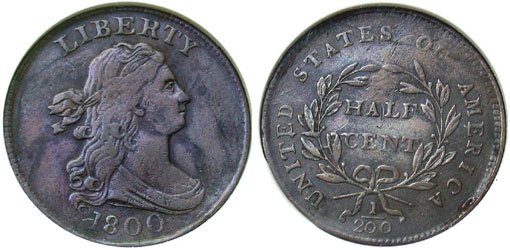
The official specifications called for the half cents to be struck from pure copper with a weight of 84 grains (5.44 grams). However, because of the varied sources for the planchets, the coins are found with a variety of weights. A disparity of up to 10% is commonly encountered, especially for the coins dated 1800 and 1802. The coins struck later in the series typically have a more standard weight.
Draped Bust Half Cents have a diameter of 23.5 mm, although minor differences may also be found. All coins were struck with a plain edge.
Quality of the pieces at the time of striking varied, although most are quite nicely produced, an indication that the Mint was continually improving its products during these early years.